A reading retreat does not require a countryside cottage, a booked venue, or even a spare room. What it requires is a dedicated corner of your home, deliberately designed for calm, and a set of habits that protect it. Design writers at Home Journal argue that the key to a personal retreat is "not square footage, but whether the space has a clear purpose, comfortable support and enough separation from distractions." This guide turns that principle into a working plan: five decisions—location, seating, lighting, storage, and distraction control—that anyone can make in an afternoon and refine over a season of reading.
Introduction: The Concept of an At-Home Reading Retreat
The phrase "reading retreat" often conjures a weekend away, but lifestyle writers have been reframing it as something domestic and repeatable. Hanna Rauch, writing for Busy with Books, describes the at-home version as "a little bubble of calm where your brain finally stops buzzing and your only job is to turn the page." The distinction matters: a retreat is not a few hours on the couch scrolling between chapters, but a scheduled, protected experience—whether that spans a whole weekend or a single cosy Sunday afternoon.
The physical space and the mental approach work together. A well-designed nook supplies the comfort and separation; the retreat mindset supplies the intention. Skip either half and the project tends to collapse back into ordinary, interrupted reading.
Step 1: Choosing Your Retreat Spot – Location Matters
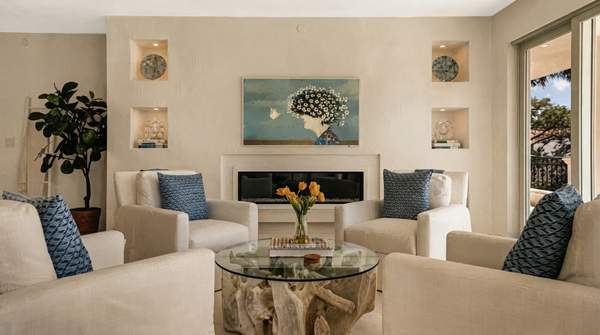
Begin by auditing your home for areas that are not part of its main circulation route and are less exposed to sound from the television or dining area. Home Journal's design guidance identifies a range of workable candidates: a spot by the window, a room corner, the end of a hallway, a bedroom alcove, or a recess beside built-in cabinetry. Any of these can accommodate an armchair, a stool, or a platform seat.
One practitioner's account of a snowed-in retreat weekend, published on the blog anntokki, adds a useful nuance: multiple reading locations throughout the day can help break up a long reading session and boost focus. Blankets moved between the couch, office chairs, and the bedroom created variety—and, when reading alongside a partner who "can't help but talk about our books," physical separation between readers minimized distraction. For a permanent nook, though, the priority is separation from household traffic over variety.
Step 2: Ergonomics for Comfort – Seating and Posture
"Comfy chair" is where most advice stops, but seating is where long sessions are won or lost. Ergonomic seating guidance from OdinLake recommends choosing chairs that fit the reader, keeping books and screens at a comfortable viewing height, and adapting the layout as needs change. Laura Turner's chair guide for Autonomous adds that proper seat depth and cushioning matter for long sessions, and notes that some chairs suit readers who hold structured positions in 60-to-90-minute sessions rather than extended marathons.
The practical takeaway: test a chair the way you actually read in it—feet supported, back against the rest, book at eye-friendly height, and enough seat depth that your knees rest comfortably. A chair that forces a slouch will end a retreat early, no matter how good the book is.
Step 3: Illuminating Your Nook – Lighting for Eye Health
Lighting guidance from Eureka Ergonomic frames a good setup as "not about a single light source" but a balanced environment built from three layers: ambient, task, and accent lighting. For a reading nook, that means a soft general light for the room, plus a dedicated task light for the page. Flexfire LEDs' lighting guidance describes the standard: a lamp angled slightly from the side, evenly lighting the book without glare or casting a shadow of your head, with an adjustable arm and multiple brightness levels so you can control both angle and intensity across longer sessions.
Glare control is not only about comfort. The American Optometric Association, advising on digital eye strain, recommends minimizing discomfort from blue light and glare, and notes that glasses worn for distance or reading may not provide the most efficient vision for closer viewing distances. If you wear corrective lenses, that is worth mentioning at your next eye exam.
Step 4: Organizing Your Essentials – Smart Storage Solutions
A nook functions only when what you need is within arm's reach and what you don't need is out of sight. Home Journal's nook designs pair the seat with nearby storage for books and essentials; OdinLake's reading-room guidance likewise treats organized storage as a core component of a space that serves reading, homework, and longer focused tasks.
Keep it modest: a small shelf or side surface for the current book, a bookmark, and perhaps a drink is enough. The qualification is one of flow—storage should be easily accessible without disrupting reading, and it should not create visual clutter. A tower of unread books beside the chair may motivate some readers and nag others; decide which reader you are before stacking.
Step 5: Mastering Distraction Control – Physical and Digital Boundaries
Distraction control has two fronts. The physical one is location: enough separation from household activity to foster calm, as the design guidance above emphasizes. The digital one is the phone. Rauch's retreat instructions are blunt—put it on "Do Not Disturb" and put it out of reach. The anntokki account treats the retreat itself as "a great time to remove yourself from screens," a digital detox built into the occasion rather than bolted on afterward.
Out of reach is the operative phrase. A phone silenced but within arm's length still exerts its pull; a phone in another room does not.
Designing Your Personal Reading Nook: A Decision Framework
Work through these five decisions in order. Each row states the key consideration, the evidence-supported finding, and the qualification that keeps the choice honest.
| Component | Key Consideration | Finding | Qualification |
|---|---|---|---|
| Location | Space selection | A window spot, room corner, hallway end, bedroom alcove, or recess beside cabinetry can host an armchair, stool, or platform seat—away from main circulation and TV or dining noise. | The space must offer comfortable support and enough separation from distractions to foster calm and focus. |
| Seating | Ergonomics | Choose a chair that fits you, with adequate back support, proper seat depth and cushioning, and a comfortable viewing height for the book. | Some chairs suit structured 60–90-minute sessions rather than marathons; test how you actually sit. |
| Lighting | Eye strain reduction | Layer ambient and task light; angle a task lamp slightly from the side to light the page without glare or head shadow, with adjustable angle and brightness. | Good lighting is essential for clarity and comfort during extended reading; glare and blue light should be minimized. |
| Storage | Accessibility | Provide nearby, organized storage for the current book and essentials—a shelf or compact surface suffices. | Storage must not disrupt reading flow or create visual clutter. |
| Distraction control | Digital detox | Set the phone to "Do Not Disturb" and place it physically out of reach; separate yourself from household noise and screens. | Removing both domestic and digital interruptions is what turns a chair into a retreat. |
Answer each row for your own home and you have a personalized nook plan: your available space, your seating needs, your lighting options, and your interruption strategy, all chosen against explicit criteria rather than guesswork.
Cultivating the Retreat Mindset: Scheduling and Intention
The furniture is half the project; the calendar is the other half. The anntokki account found that scheduling a specific day in advance—rather than deciding to read "today"—built excitement and made the retreat feel special, down to planning what to do each hour. Rauch's approach to the book stack carries the same intentional, no-guilt spirit: pick one to three books that feel like a treat, and don't pressure yourself to finish them all. "It's not a reading challenge," she writes. "It's a chance to reconnect with what you love."
Boundaries with household members complete the mindset. A scheduled retreat announced in advance, a door left closed, and a phone in another room together signal that this time is protected. The retreat mindset, in short, is scheduling plus boundaries plus permission to enjoy it.
Your Personal Reading Retreat: A Space for Sustained Engagement
Readers should commit to designing and using a dedicated home reading space by systematically addressing location, seating, lighting, storage, and distraction control, complemented by intentional scheduling and boundary setting. The measure of success is concrete: the reader consistently uses the designated nook for focused reading sessions and reports reduced distractions and increased reading enjoyment. Schedule your first retreat afternoon, work through the five decisions, and see whether the pages turn more easily in a corner that belongs to the book.
Sources
- How to Create a Personal Retreat at Home: 5 Reading Nook Ideas - Home Journal
- How to DIY a Reading Retreat at Home — Busy with Books
- how to create an at home reading retreat — anntokki
- Reading Room Ideas: Create a Comfortable Ergonomic Space — OdinLake
- Best Reading Chairs: 7 Picks for Long Sessions & Back Support — Autonomous
- Ergonomic Lighting for Home Office — Eureka Ergonomic
- What Is the Best Light for Reading? 6 Task Light Must-Haves — Flexfire LEDs
- Computer vision syndrome (Digital eye strain) — AOA