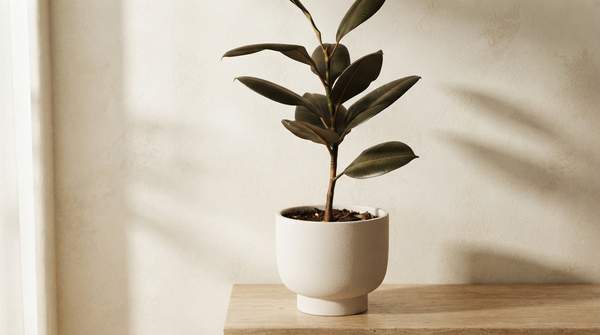
The short answer for design-conscious homeowners: the snake plant and spider plant are the most forgiving, low-light-tolerant choices; the peace lily is the strongest documented performer against benzene and ammonia; English Ivy stands out for mold spores; and the Warneck dracaena brings architectural height while removing formaldehyde. But every plant on this list works slowly, and none replaces ventilation or a good filter. Here is how to choose among them.
Enhancing Your Home: The Power of Air-Purifying Plants
The idea that houseplants clean the air traces back to a practical problem: keeping astronauts alive. In the late 1980s, NASA scientists studying air purification for future space stations tested 19 common houseplants against three ubiquitous indoor air pollutants, and found that all of them removed some pollutants, though certain plants were more efficient at removing specific ones than others, according to the University of Connecticut's Home & Garden Education Office.
That research became the foundation for decades of plant recommendations. A 1989 NASA study is, as the home design writers at Young House Love put it, "often cited as definitive evidence that plants are the secret to better air quality in your home." The reality is more nuanced, but the underlying capability is real: plants convert carbon dioxide to oxygen and remove volatile organic compounds like benzene and formaldehyde from the air.
Understanding Common Indoor Pollutants
The pollutants in question are worth knowing by name. Formaldehyde and benzene are volatile organic compounds that can off-gas from cleaning products, furnishings, and building materials. Trichloroethylene is a third target of the NASA research. Ammonia and airborne mold spores round out the concerns that specific plants have been tested against.
The scale of the original findings is instructive. In NASA's sealed-chamber experiments, the Warneck dracaena removed 50 percent of the formaldehyde but only 10 percent of the trichloroethylene over a 24-hour period, as UConn's education office recounts. In other words, effectiveness is pollutant-specific, not general, which is exactly why a side-by-side comparison matters more than a simple list of "good plants."
Top 5 Air-Purifying Plants for Design-Conscious Homes
Our five selections — snake plant, spider plant, peace lily, English Ivy, and Warneck dracaena — are chosen because they combine documented pollutant removal with genuinely attractive forms and manageable care. All five appear repeatedly across expert-cited recommendations, and the team at Young House Love notes their picks were narrowed to plants "most often cited by experts AND the plants that we think look best too."
Each brings a distinct character. The snake plant's upright, sculptural blades suit modern interiors. The spider plant's arching leaves and trailing "spiderettes" make it a natural for hanging baskets or high shelves. The peace lily offers glossy foliage and white blooms. English Ivy drapes and climbs. The dracaena's striped, architectural leaves fill vertical space. Beauty and function are not in tension here.