Yes — the materials you live with can measurably shape how you feel. Research in environmental psychology has found that interior materials are among the individual elements of a home related to restorativeness, the mind's capacity to recover from mental fatigue. Wood, in particular, has been directly linked to improved restorativeness in home environments, while stone and natural textiles contribute grounding, warmth, and tactile comfort. The evidence is strongest for wood, more suggestive for stone and fiber — and knowing that difference is itself a design tool. Here is what the research and design practice say, and how to put both to work.
The Calming Power of Nature: Why Natural Materials Matter
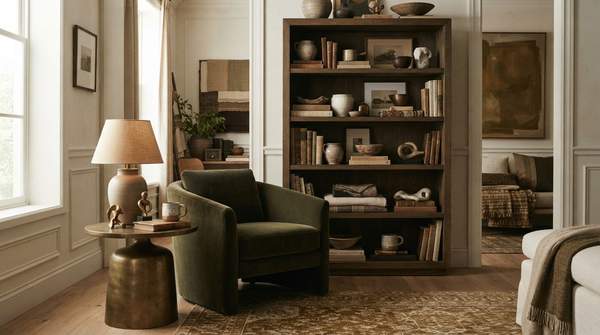
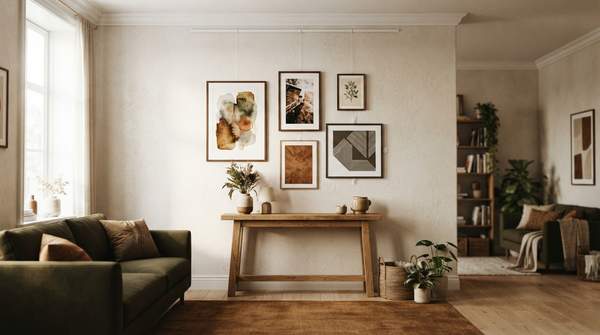
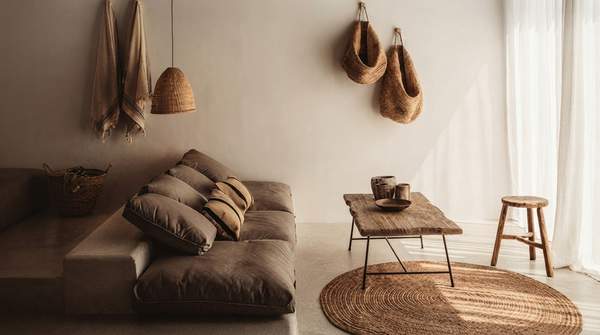
Begin with a single object. A wooden dining table with visible grain tells a story of growth and resilience, as the furniture maker Another Country observes in its design writing, while a woven jute rug adds warmth and tactile richness underfoot. This is more than aesthetics. Environmental psychology studies indicate that natural elements in interiors can trigger positive neurological responses, including improved cognitive function and emotional regulation, and are linked to improved mental health and reduced stress.
Design writers converge on why. Bringing elements of the outdoors into a living space creates an environment that feels warm, calming, and connected to nature, according to the National Design Academy. Emilceramica's design magazine similarly notes that materials like wood, stone, and natural fibers can create a welcoming and serene environment, evoking a connection with nature. The common thread is a sensory bridge: these materials carry the textures, temperatures, and gentle irregularities of the natural world into rooms where we spend most of our lives. Wood, stone, bamboo, wool, clay, and linen, as Another Country frames it, "connect us to the earth, grounding us in spaces that feel more organic and serene."
Understanding Restorativeness: The Science Behind Nature's Influence
Restorativeness is the psychological quality of an environment that helps attention recover and negative emotion subside. The scientific grounding comes from environmental psychology: a peer-reviewed study of interior materials and home environments, published in the journal indexed by PubMed Central, traces the concept through earlier work by Hartig and colleagues, who compared environmental categories and found that participants felt less anger and sadness in a restorative natural environment. Related research by Cho and colleagues found that restorative environments in cultural heritage sites could improve cognitive functioning.
Crucially, the research establishes that restorativeness is not confined to forests or parks. Within a home, several individual elements — greenness, window views, furniture type, and interior material — have each been found to be related to restorativeness. And materials are not passive: they carry their own attributes that affect occupants' physical, psychological, and physiological status. In other words, the surface your hand touches and your eye rests on is an active ingredient, not a neutral backdrop.
Complementary reporting on nature-inspired interiors fills out the picture of what these effects look like in daily life. Nature elements like plants, natural light, and earthy colors have been shown to lower stress levels and promote a sense of calm, while nature-inspired décor can elevate mood and is linked to improved mental health and a greater sense of connection to the environment. The materials are one strand of a broader pattern — but a strand you can choose deliberately, room by room.
Natural Materials: Your Guide to Psychological Well-being at Home
The table below compares the three most common natural materials by their documented psychological effects and sensory character, so you can match a material to the atmosphere you want a room to hold. One honest caveat from the research: wood has been directly linked to improved restorativeness, while the specific restorative effects of other materials, such as stone, are not yet fully established by all studies — stone's benefits are better described as grounding and stability than as proven restoration.
| Material | Primary Psychological Benefit | Key Sensory Property | Best Use Case in Home |
|---|---|---|---|
| Wood | Research indicates improved restorativeness in home environments with wood; provides warmth and a calming effect | Tactile and visual warmth, varied textures, a sense of grounding and stability | Furniture, flooring, and wall accents — versatile applications that enhance warmth and connection |
| Stone | Conveys permanence, stability, and grounding; specific restorative effects are not yet fully established by all studies | Coolness, solidity, and subtle natural patterns — a distinct tactile and visual experience of robustness | Flooring, countertops, and accent walls where durability and a sense of grounding are desired |
| Natural textiles (linen, cotton, wool) | Adds softness, comfort, and a calming, warm dimension — coziness and tactile well-being | Soft, varied tactile textures and warmth, engaging touch and visual softness | Cushions, throws, rugs, and upholstery that soften harder surfaces |
Read the table as a palette of sensory registers rather than a ranking. Wood warms, stone anchors, textiles soften. A room built from only one register — all hard stone, or all soft wool — tends to feel monotone to the senses, while a room that deliberately pairs registers gives the eye and hand somewhere to travel.
Harmonizing Your Home: Practical Tips for Combining Natural Textures
Choosing the right materials is only half the work; the calm comes from how they are layered together. Another Country's practical guidance offers a sequence that keeps a space cohesive rather than cluttered. Start small: you do not have to renovate an entire home. Begin with accessories — a wooden bowl, a jute area rug, linen cushions — and let the room's character build gradually. This staged approach also lets you test which textures you actually reach for and enjoy, before committing to larger surfaces.
Then mix and match with intention. Combining different textures such as wood, leather, and stone creates depth and contrast, which is precisely where the comparison above becomes useful: pair a material that grounds (stone) with one that warms (wood) and one that softens (linen or wool), so no single sensory register dominates. A worked example: in a living room, a stone-topped coffee table or slate accent wall provides the grounding element; a wooden side table and floorboards carry the warmth; linen cushions and a wool throw on the sofa supply the softness. Each material is doing a distinct psychological job, and the contrast between them is what makes each legible.
Balance with light — natural materials look their best bathed in daylight, whether through sheer curtains or skylights. Finally, go green: living plants complement natural materials beautifully and enhance the biophilic design effect, and nature elements like plants, natural light, and earthy colors have been shown to lower stress levels and promote a sense of calm. The layering advice itself is synthesized from general design guidance on incorporating materials, so treat it as a starting framework and adjust to your own rooms rather than a fixed formula.
Transform Your Home, Transform Your Mind: A Practical Decision
The evidence points to a clear decision: integrate a variety of natural materials into your home decor, prioritizing those with documented psychological benefits — wood for restorativeness, natural textiles for comfort, stone for grounding — to create a more calming and restorative living environment. Where the science is firm, lean on it; where it is suggestive, let your own sensory response guide you. This is design guidance, not therapy: the effects described concern everyday well-being, not treatment of any condition.
How will you know it is working? Observe a noticeable increase in feelings of calm, comfort, and mental restoration within your home spaces, as well as a reduction in perceived stress after spending time in these environments. That subjective shift — feeling genuinely restored after time in a room — is the outcome the research on restorativeness is built to predict, and the simplest test of whether your material choices have done their work. Start with one wooden bowl or one linen cushion this week, and let the room tell you what to add next.
Sources
- The Effects of Interior Materials on the Restorativeness of Home Environments - PMC
- Incorporating Natural Materials at Home - National Design Academy
- How does interior design help mental health? How to transform your space and mind — Emilceramica
- The Beauty of Using Natural Materials in Interior Design — ANOTHER COUNTRY
- The Power of Nature-Inspired Interiors: Boosting Well-Being Through Design — Gardenonthewall