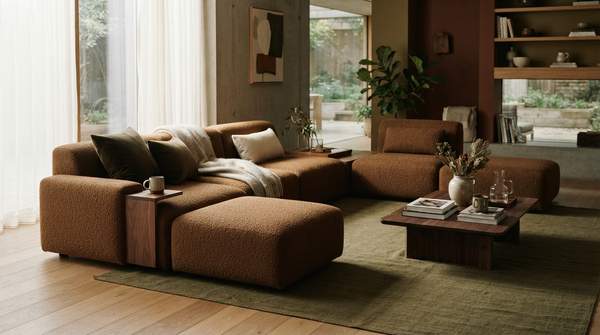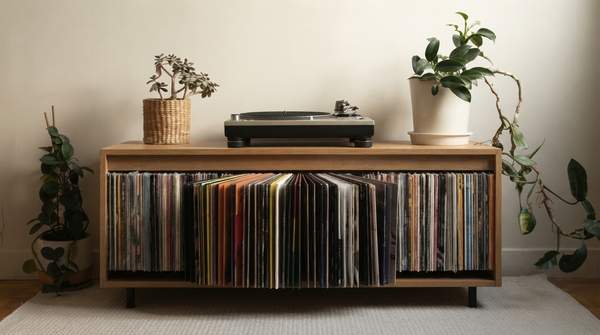
The short answer for design-conscious collectors: there is no single best vinyl storage format, only the best match between your collection size, your floor or wall space, and how you like to browse. A single modular cube suits a starter collection of 50 to 80 records; a four-by-four modular wall unit holds 800 to 1,200 LPs and becomes a statement piece. Wall mounts display a handful of records with zero floor cost, while crates keep 50 to 70 LPs portable and industrial in feel. Whatever you choose, two numbers decide whether it actually works: at least 33 centimetres of internal depth, and a shelf rating your records' weight will not exceed.
Introduction: Balancing Style and Storage for Your Vinyl Collection
Anyone who has tried to store records attractively knows the frustration. Caitlin Higgins, writing on Emily Henderson's design blog and drawing on years spent in the record industry, calls the search for visually appealing options "THE. FREAKING. WORST," noting that the universal default, the IKEA Kallax, is sturdy and affordable but "not necessarily an aesthetic fit for every home." Her firsthand point echoes a wider one: records impose unusually strict physical demands—upright storage, generous depth, serious weight support—on furniture that must also look intentional in a living room.
The stakes are preservation as much as style. As Ian White puts it in his storage guide for ecoustics, "Every album is a piece of history you can touch, display, and hold—something that streaming will never give you." The right storage system makes the collection part of the space rather than a clutter problem. That means comparing storage types—modular cubes, listening consoles, wall mounts, and crates—before shopping for any specific brand or model, which is what the rest of this article does. The comparison below focuses on 12-inch LPs; cost is left aside because it varies widely within each category.