The short answer: choose lacquer if you want maximum protection with almost no upkeep, choose an oil or oil-wax finish if you prize a natural feel and the ability to repair damage yourself, and reserve plain wax for pieces whose job is beauty rather than endurance. The choice is not about which finish is "best" — it is about which trade-off you can live with, because every finish involves tradeoffs, as Berkshire Products' finishing guide puts it: some soak into the surface and preserve a natural feel, while others build a protective film that offers greater resistance to water, abrasion, heat, and everyday wear.
Understanding Wood Finishes: Oil, Wax, and Lacquer
A finish does more than make wood pretty. As the Wagner Meters team explains in its woodworking knowledge base, the right finish provides protection and durability, and the sheer range of options can feel overwhelming. Narrowing the field to the three most common clear finishes for interior furniture — oil, wax, and lacquer — makes the decision manageable, because these three represent fundamentally different ways of protecting wood.
The key distinction is how each finish relates to the wood itself. A comparison of table finishes from hoom.co describes oil-wax as a finish that penetrates deep into the wood and protects it from within, while also creating a thin, breathable layer on the surface. Lacquer, by contrast, sits on top: the same comparison frames it as the choice when "the priority is maximum protection and largely maintenance-free use." Wax, as Emily Woodman explains in her finishes comparison for Rothko and Frost, does not build up into a thick film like lacquer — instead, it fills the surface pores and creates a thin, buffable layer.
That single difference — penetrating versus film-forming versus a soft surface layer — drives everything else: how the piece feels underhand, how it ages, how it resists a spilled glass, and how easily a scratch can be fixed. This guide covers only these three clear interior finishes; it does not address stains, dyes, paints, or specialized exterior coatings.
Oil Finishes: Natural Feel and Easy Repair
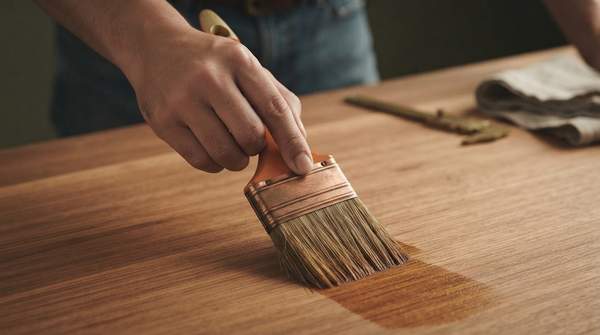
An oil or oil-wax finish works from the inside out. Because the oil soaks into the wood rather than forming a distinct layer on top, the surface you touch is essentially the wood itself — warm, natural, and grain-forward. This is the finish for people who want a table or dresser that feels like wood, not like plastic.
The practical consequence of that integration is repairability. Woodman notes that oil finishes wear gradually and will need refreshing every year or two on heavily used surfaces, but the trade-off is that they are the easiest finish to repair: simply sand the damaged area lightly and re-oil. New oil blends seamlessly with old oil, so a scratch or water ring becomes a localized afternoon task rather than a reason to strip and refinish the entire piece.
The cost of that natural feel is ongoing attention. Heavily used surfaces — a daily dining table, a kitchen worktop — will need refreshing on that one-to-two-year rhythm, while pieces that are touched less often can go considerably longer between treatments. Oil finishes offer good protection against daily use, but they do not deliver the maximum resistance to liquids and scratches that a film finish provides. If your household includes enthusiastic children, frequent dinner parties, or a habit of setting hot mugs down without coasters, that gap matters.
Wax Finishes: Soft Luster and Minimal Protection
Wax is the most tactilely seductive of the three. Woodman describes its effect precisely: "a soft, satiny lustre that is immediately appealing," with a distinctive tactile quality — smooth, warm and slightly silky. Common choices include beeswax, carnauba wax, and blended products; carnauba is the hardest natural wax and gives the highest shine, while beeswax is softer and warmer.
But wax is primarily a surface treatment rather than a penetrating conditioner or a hard film, and that limits what it can do. It fills pores and buffs to a thin, delicate layer — which means it offers minimal protection against wear, moisture, and heat compared with the other two options. A waxed surface is not the right candidate for a high-traffic or frequently used piece such as a dining table that sees daily service.
Where wax earns its place is on furniture whose role is decorative or lightly handled: a bedroom dresser, a hall console, an heirloom cabinet that is admired more than used. There, its soft sheen enhances the wood's natural appearance without imposing any thick film, and the modest protection it offers is proportionate to the demands placed on the piece. Reapplication is straightforward — the layer is thin and buffable by design — but it is a finish you will revisit more often than you would lacquer.
Lacquer Finishes: Maximum Durability and Low Maintenance
Lacquer is the finish for households that would rather not think about finishes at all. The hoom.co comparison lists its advantages plainly: very high resistance to liquids and scratches, quick and simple daily care, and no need for periodic maintenance. A lacquered dining table shrugs off spilled wine and daily scrubbing in a way that neither oil nor wax can match.
Those strengths come from the film itself. Lacquer builds a distinct protective layer over the wood, and that layer is what stands between the surface and whatever the day brings. The trade-offs are the mirror image of oil's. The surface feels less natural to the touch — you are feeling the film, not the wood. The formulation may contain chemical components, which matters to buyers who prefer natural materials in their homes. And, most consequentially, spot repairs cannot be done on your own: damage to a lacquered surface generally means professional refinishing rather than a quick sand-and-reapply.
Lacquer therefore suits the pragmatic household: the family dining table, the desk that doubles as a homework station, any surface whose beauty must survive constant use. It asks almost nothing of you day to day, but when something goes wrong, the fix is bigger.
Decision Framework: Choosing Your Wood Finish
The framework below classifies each finish against the three priorities homeowners most often name — protection, natural feel, and easy repair — and then maps those priorities to the pieces of furniture where each finish performs best. Find your dominant priority in the left column and read across.
| Your Priority | Best Fit | Why | Ideal Furniture |
|---|---|---|---|
| Maximum protection and low maintenance | Lacquer | Very high resistance to liquids and scratches; quick daily care; no periodic maintenance needed | Daily-use dining tables, family kitchen surfaces, hardworking desks |
| Natural look and feel | Oil / oil-wax | Penetrates the wood and protects from within, so the surface feels like wood, not a film | Bedroom furniture, feature tables, pieces meant to be touched |
| Easy DIY spot repairs | Oil / oil-wax | Lightly sand the damaged area and re-oil; new oil blends with old | Any piece likely to collect scratches, in a household willing to refresh it |
| Soft, satiny luster on a lightly used piece | Wax | Thin, buffable layer with a smooth, warm, slightly silky feel — but minimal protection | Decorative consoles, heirloom cabinets, rarely used pieces |
Two boundaries sharpen the choice. First, if a piece sees heavy daily use, wax drops out of contention — its thin surface layer is simply not built for that. Second, if you cannot or will not refinish professionally, lacquer's repair difficulty becomes a real cost, not a footnote. Between those boundaries, the decision is mostly aesthetic: do you want to feel the wood, or feel its armor?
Making Your Choice: A Finish for Every Furniture Piece
Select a wood finish based on the primary trade-off between maximum protection and low maintenance (lacquer) and natural feel with easy repair (oil or wax), considering the furniture's use and your desired aesthetic. A household can sensibly mix finishes: lacquer on the table that hosts every breakfast, oil on the dresser you run your hand across each morning, wax on the cabinet that mostly holds its beauty.
Whatever you choose, the outcome is checkable. Watch the chosen finish's performance in daily use — how it resists the liquids and scratches your household actually produces — its aesthetic integration with the furniture, and the ease of its required maintenance schedule. If your lacquered table still wipes clean after a year of dinners, or your oiled dresser took an afternoon to refresh rather than a professional's week, the finish is doing its job.
Sources
- Wood Finishes Guide — Berkshireproducts
- Top 10 Essential Wood Finishes: Pros, Cons, and Application Tips — Wagner Meters
- Oil-Wax or Lacquer? Comparison of wood table finishes — HOOM
- Wood Finishes Compared: Oil vs Wax vs Lacquer vs Varnish vs Shellac — Rothko and Frost