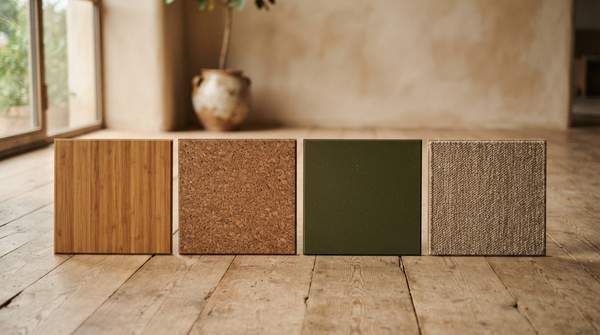
No single "green" floor wins on every axis, so the honest answer for an eco-conscious homeowner is a trade-off: strand-woven bamboo brings hardwood-rivaling hardness, cork offers unmatched resilience and renewable harvesting, natural linoleum delivers decades of service from plant-based ingredients, and hemp—still emerging—pairs low emissions with a carbon-negative footprint in at least one branded product. This guide compares those four materials across environmental impact, durability, and health factors such as VOC and formaldehyde emissions, so you can match the material to your household's top priority.
Understanding Sustainable Flooring: More Than Just 'Green'
A floor's eco-credentials are not settled by its ingredient list. Redfin's home-improvement editorial team frames sustainability as a lifecycle question: what matters is whether a material can be recycled and renewed, whether it was responsibly manufactured, the distance and cost of transportation, the maintenance it will need over time, and its durability and lifespan. A renewable material that ships across an ocean and needs frequent replacement may not be the green choice it appears to be.
That lifecycle lens is not just consumer advice—it is how technical assessments are built. A Dovetail Partners report on flooring's environmental performance, which draws primarily on National Institute of Standards and Technology data, examines impacts from production, transportation, installation, use, and disposal across a wide range of impact categories. The same report makes a second point homeowners should internalize: durability is an environmental variable. A floor that lasts longer spreads its production impact over more years of service.
Indoor air quality is the third pillar. Adhesives and finishes can off-gas VOCs and formaldehyde long after installation, which is why binder chemistry—not just the raw material—determines whether a "natural" floor is also a healthy one.