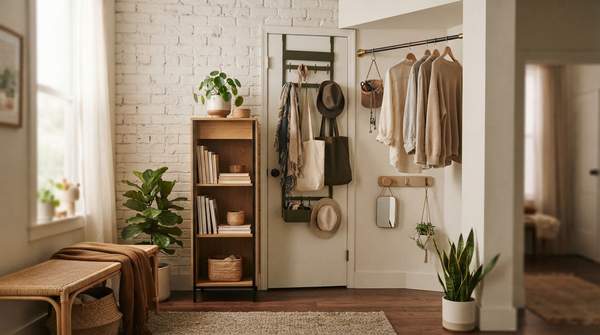
The short answer for most renters: match the method to the weight of what you're storing. Heavy books and substantial decor belong on freestanding units; light, frequently used items suit over-the-door organizers; tension rods create flexible hanging space without tools; and adhesive hooks and shelves should carry only the lightest loads, like keys or a small towel. Whichever you pick, remember that "no drill" does not automatically mean "damage free" — the wall surface, the load, and the removal technique all determine whether you get your deposit back.
Maximizing Vertical Space: Renter-Friendly Storage Solutions
In a small apartment, vertical space is valuable, but drilling may be restricted and removable products are not risk-free on every paint or finish, cautions a guide from the Tidy Small Home editorial team. Its core framing is worth adopting: renter-friendly wall storage is less about finding products labelled "damage-free" and more about choosing a storage method that matches the wall, the load, the lease, and the way you plan to remove it. That turns shopping from "what can I stick on this wall?" into a four-part test you can apply to any product.
This comparison covers the four most common non-permanent approaches — freestanding units, over-the-door organizers, tension systems, and adhesive products — and excludes anything requiring drilling or permanent modification. It deliberately recommends no specific brands. Whatever you buy, read its instructions and weight limits, and for genuinely heavy loads, seek professional advice rather than guessing at wall capacity.