The fastest route to a modern home with genuine character is not a room full of antiques. It is a single, well-made vintage piece—an armchair, a nightstand, a retro dining table—chosen deliberately and placed against a contemporary backdrop. This guide centers on Mid-century modern as the detailed example, because its proportions and construction make it unusually easy to verify and to blend. What follows is a three-strategy integration method and a diagnostic checklist for judging craftsmanship before any money changes hands. It is a guide to aesthetic integration and quality assessment, not to valuation, restoration, or where to shop.
Spotlight on Mid-century Modern: Aesthetics and Identification
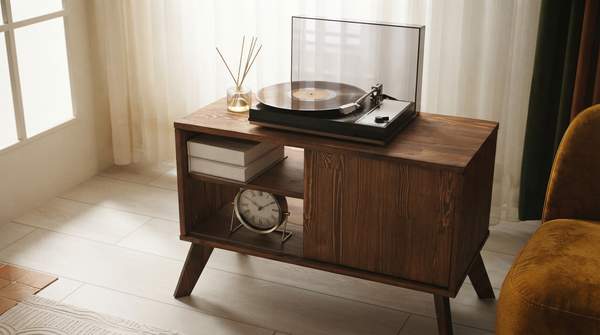
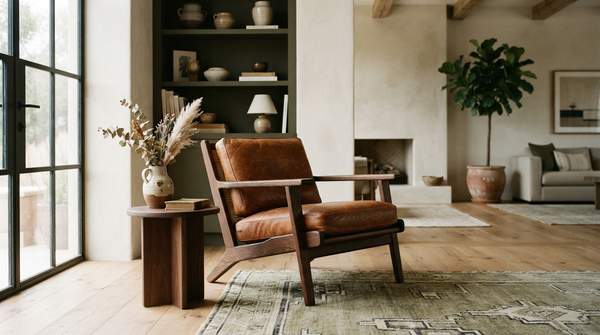
Writing for the furniture journal at Enky, Bríd Breen offers a memorable first test for the style: "If a piece looks calm, slim, and confident, start here." Mid-century modern furniture often features clean lines, tapered legs, and warm wood tones such as walnut or teak. Their practical proportions allow them to integrate easily into modern spaces. That inherent compatibility is precisely why the style has become the go-to example for blending old into new: a genuine Mid-century piece rarely fights its surroundings the way a heavier, more ornate antique can.
Identification, however, should go beyond surface looks, because the style's clean silhouette has been widely copied. Breen's advice is blunt: "The best test is underneath." Genuine pieces often show mortise-and-tenon or dowel construction where the legs meet the frame, while later reproductions can rely on staples or brackets. That single check separates furniture built to last from what she elsewhere calls a fashionable shell with weak bones—and it requires nothing more than turning the piece over before you commit.
Vintage Furniture Quality Checklist: Mid-century Modern Edition
Use this table as a pre-purchase diagnostic. Each row contrasts what a genuine, well-preserved Mid-century modern piece typically shows with the shortcuts common in mass-market reproductions, so you can move from impression to inspection in a few minutes. One qualification matters: this contrast applies to well-preserved vintage pieces versus common contemporary manufacturing shortcuts, not to all modern furniture.
| Assessment Area | Authentic Vintage Indicator | Reproduction / Lower-Quality Indicator |
|---|---|---|
| Joinery (construction method) | Mortise-and-tenon or dowel joints where the legs meet the frame | Staples, screws, or metal brackets holding parts together |
| Materials (wood type and quality) | Warm, solid woods such as walnut or teak, made to last | Unspecified materials, suggesting a fashionable shell over substance |
| Proportions (aesthetic design) | Slim, tapered legs and clean lines that sit naturally in modern rooms | Generic shapes that can look forced or out of place in contemporary spaces |
The reasoning behind the table is simple: joinery reveals intent, materials reveal honesty, and proportions reveal design lineage. A maker who cut interlocking joints expected the piece to survive generations; a maker who stapled parts together expected it to survive a move or two at most. Read together, the three checks turn a vague feeling of "old and nice" into an evidence-based judgment about whether the piece is a long-term buy.
Why these checks matter is illustrated by a piece of furniture history Breen recounts: a 17th-century cabinet at Knole House in Kent, whose timber conservators dated to the winter of 1652 and traced to the eastern Baltic region. The lesson is not age for its own sake. As she puts it, "a piece built with honest timber and proper joinery is a better long-term buy than a fashionable shell with weak bones."